

This spring, the Little School Science Room emanated with the gentle chirping of new life and the buzz of curiosity as our first-grade students embarked on a unit focused on life cycles. This immersive five-week science unit empowers our young learners to embrace the scientific method, cultivate compassion, and become thoughtful engineers.
“Our primary goal with this unit,” says Little School science and STEAM teacher Jenny Lee, “is to help students understand life cycles through direct observation. But it’s also about fostering a deep sense of responsibility and care for living creatures.”
Understanding the Cycle of Life
Students began by exploring the question, “What is a life cycle?” They first focus on the life cycle of plants, from seed to sprout, and observe this firsthand in the EMS garden. Next, they explore “What is an egg?” and learn about the diverse creatures that lay eggs — from reptiles to birds — and the process of an embryo growing inside. From here, students dig into the anatomy of an egg — learning about its various parts and their crucial roles in a chicken’s life cycle, all through engaging discussions. Then, the anticipation in the classroom rises when fertilized eggs finally arrive and are carefully placed into an incubator, marking the beginning of the observation period of the chicken’s life cycle.
“We teach them that a cycle, whether it’s a plant or a chicken, repeats itself and every part is essential,” says Lee. “It’s a foundational concept that shows them how to spot patterns in nature.”
An exciting moment comes around day eight of incubation, when students participate in “candling.” They hold the eggs up to a light, so they can peer inside and see the embryo’s development. “This firsthand observation ignites their curiosity and provides tangible evidence of life unfolding,” says Lee.
Hatching and Handling
A private live stream of the incubator is set up so students can observe the hatching process in real-time, preparing them for the arrival of their new classroom companions.
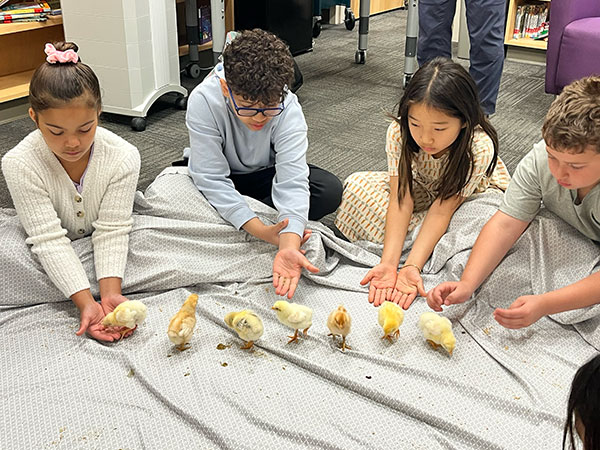
Once hatched, the chicks become central to the first graders’ learning, and students learn proper care and handling of the baby chicks. “There is a profound social-emotional aspect to the unit,” says Lee. “Holding the chicks can be very calming for the students. For some, overcoming the fear of picking up a chick transforms into confidence. It’s a powerful lesson in compassion and self-efficacy.”
The unit also gently addresses the natural course of life, including the sensitive topic of eggs that might not hatch. “Explaining this in science terms in a supported environment allows students to build emotional resilience and understand that not all outcomes are predictable,” adds Lee.

Designing for Our Feathered Friends
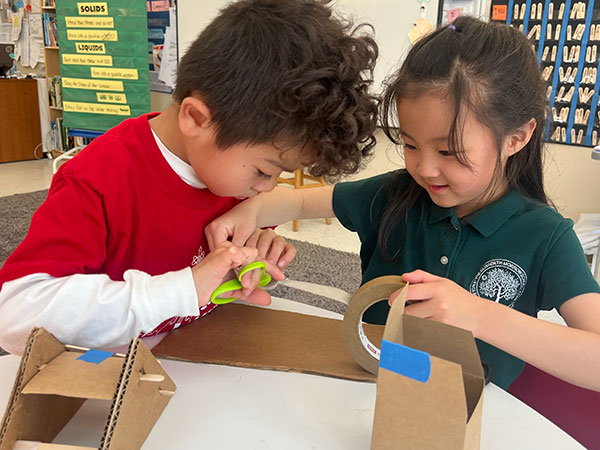
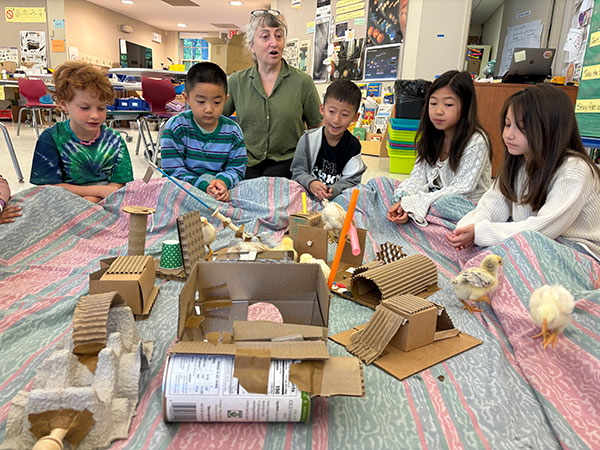
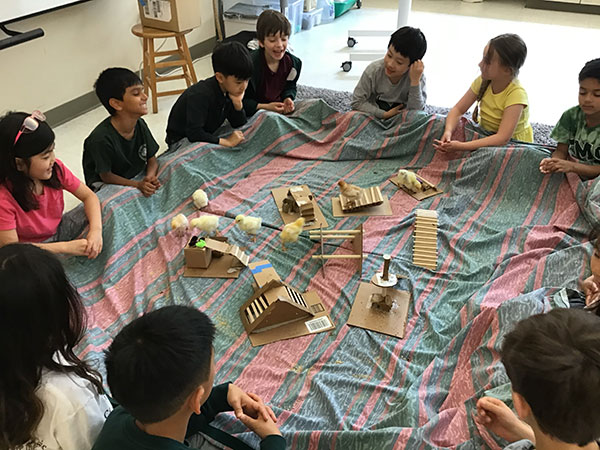
Recognizing the chicks’ need for stimulation and play, students are tasked with designing and building “playground” equipment for them. “This hands-on learning and exploration is a practical application of the scientific method,” says Lee. It includes:
- Observation & Defining the Problem: Students observe the chicks’ behaviors, such as pecking, scratching, exploring, and resting. They identify the problem: The chicks need stimulating structures beyond a flat surface.
- Hypothesis & Design: Students brainstorm and sketch various play structures (ramps, tunnels, perches), hypothesizing what the chicks would enjoy.
- Experimentation & Construction: Using simple materials like cardboard, wooden dowels, and paper towel rolls, students collaboratively construct their designs.
- Analysis & Conclusion: The structures are placed in the chicks’ enclosure. Students observe how the chicks interact with their creations and gather data on which designs are successful and why, leading to discussions about refinement and iteration, key components of the design thinking process.
“The collaborative design challenge reinforces teamwork, active listening, and respectful communication as students worked together towards a common goal,” adds Lee.
Building a Compassionate Community
The unit also fosters interconnection with nature, each other, and within themselves. “Direct interaction with the chicks nurtures a deep sense of empathy and responsibility. Students learn the importance of gentle care for another living being,” says Head of Lower School and Director of the Arts Amelia Gold. “The students’ connection with these tiny birds is truly remarkable to observe.”
The chick unit captivated the entire Little School division, with students from all grades eagerly awaiting updates. Consequently, the science room transformed into a hub of joyful inquiry where younger and older students collaborated on thoughtful questions about chick development and behavior. This comprehensive engagement nurtured a shared sense of wonder and curiosity, demonstrating the power of a single, living science unit to forge a vibrant, interconnected learning community.
There's No Better Time to Support Your Child's Education
Every time you donate to one of Elisabeth Morrow's dedicated funds, you help enrich the daily experiences of our community on campus. STEAM spaces are enhanced, library catalogs are expanded, scholarships are funded, and teachers are hired. Every day, you can see the impact your generous donations have on campus.
